


Living in a hotel vs. furnished apartment: which is better for business travelers?
With more accommodation options than ever before, you can choose what best fits your personal and professional needs.

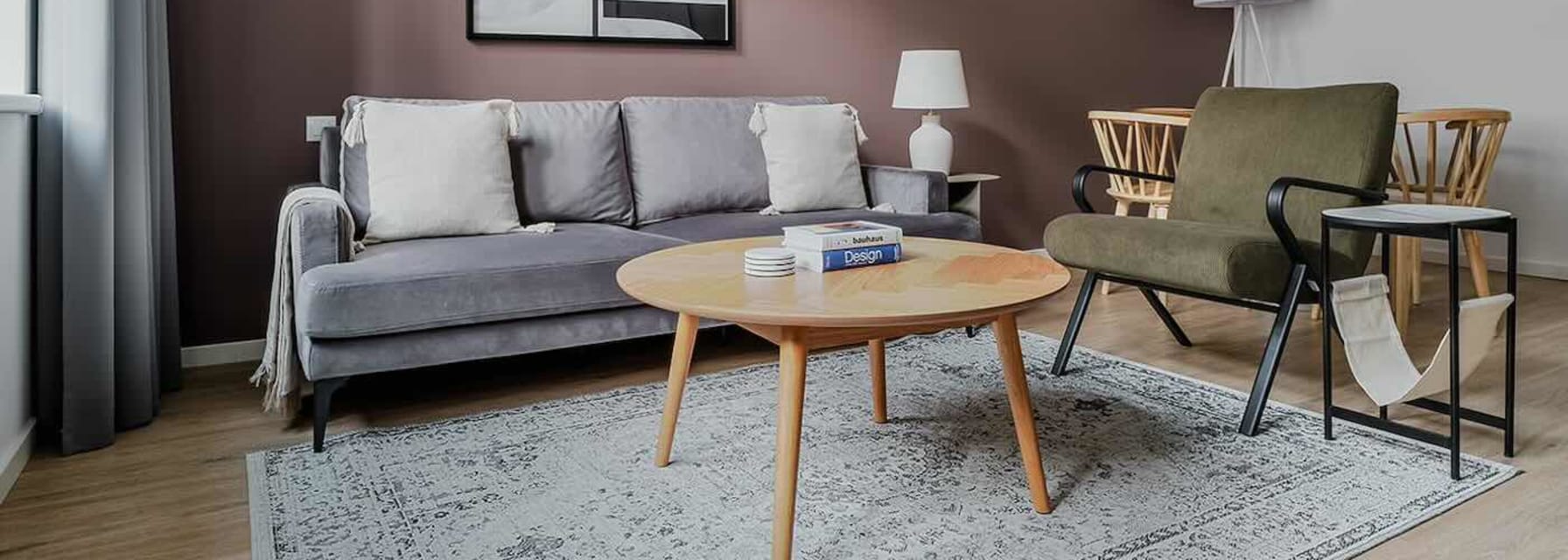


The phrase “work trip” is likely to conjure visions of hotel bars, stuffy conference rooms, and mediocre strip-mall dining. While that might be a fun (or tolerable) scene for a few days, it doesn’t exactly feel like home. For anyone heading off on a longer work assignment—say, for one to six months—the hotel life can get old. The good news is, you have other options. Unlike years ago, when vacation-rentals-by-owner were the only alternative to traditional hotels, you can now find furnished apartments, such as through companies like Blueground, which make it easy to settle in somewhere for a longer stay.
That said, the right accommodation for you will depend on your personal travel style, how long you’ll be staying, and where you plan to go. For executives weighing apartment living vs. extended-stay hotels, there’s plenty to consider: A furnished apartment might feel like home away from home for some people, while others love the plush hotel life. What’s the right move for you? Allow us to help you decide.
Hotel vs. furnished apartment: cost comparison
When comparing monthly hotel stays vs furnished apartments, price is a major factor—especially in popular travel destinations where lodging is expensive. In general, a furnished apartment in New York City would save you $2,945 over a hotel for a 30-day stay.
In the US, hotels range in cost depending on the quality of experience you’re looking for and the time of year you’re staying, running from $150-$200 for a budget option to $1,500 or more for luxury accommodation. If you’re staying long-term, that can add up. Say you’re traveling to San Francisco for a month: In 2026, the forecasted average daily rate for a hotel is $241. Over a month, that totals to about $7,230. If you’re going to New York City, the average daily rate is $333, totaling about $9,990 per month. Some hotels (especially those geared toward extended stays) may offer a discount for longer travel or corporate bookings, though that’s not always the case.
The cost of a furnished apartment is also highly variable, depending on size, time of year, and the lifestyle you want. Blueground, for example, uses dynamic pricing based on factors such as seasonality, duration, and location. For June 2026, you can snag a San Francisco apartment on Blueground for around $6,600 per month or more, while a New York City apartment on Blueground starts at about $3,500 per month. Staying longer generally unlocks better rates, with discounts kicking in when you book for three, six, or even 12 months.
So, what’s the better option for a long-term stay? Here’s how the math works out with a mid-range apartment option from Blueground and a hotel at the average price in New York City, for example.
New York City
| Duration | Hotel | Furnished Apartment | Cost Savings |
|---|---|---|---|
| 30 Days | $9,990 | $6,945 | $2,945 |
| 60 Days | $19,980 | $13,746 | $6,234 |
| 90 Days | $29,970 | $20,578 | $9,392 |
Other hidden costs to consider
Lodging isn’t the only cost to think about—the city you’re in will have an impact on how you spend your time and money. Keep these other costs in mind as you decide whether a furnished apartment or an extended hotel stay might be right for you.
- Meals. Whether you have a usable kitchen will certainly affect how much you spend on food. Cooking at home is substantially cheaper than eating out, with some estimates saying that the average meal is three times more costly when eaten out, even at an inexpensive restaurant. Not to mention, cooking at home is generally better for you; research shows that home-cooked meals are healthier overall.
- Laundry. If you’re staying somewhere long-term, you’ll need to do laundry—and those costs can add up if you don’t have a washer and dryer available to use free of charge. In New York City, for example, wash-and-fold laundry service costs between $1.50 and $5.00 per pound (plus more, if you want delivery), while self-service laundromats typically cost $3.00 to $7.00 per load to wash and dry. If you do a medium-sized load of laundry (about 8 pounds) once a week, that could translate to $50-$160 per month to have it done for you, or $9-$29 per month to hit the laundromat—plus, factor in the hours you’ll spend watching it spin. Hotel laundry service, on the other hand, is significantly more expensive. Hotels typically charge a fixed amount per item, which can quickly add up to over $100 per load.
- Nearby goods and services. In many cities, most hotels are located in central areas, which might be full of entertainment, restaurants, and nightlife, but farther from the kinds of places you want in your regular routine—such as a gym, park, or grocery store. Moreover, gyms or grocery stores in that area may be more expensive due to their centralized location.
- Security deposit. Keep in mind that if you stay in a furnished apartment like those offered by Blueground, you may need to pay a refundable security deposit up front.
- Taxes. In certain locations, short-term stays—whether in hotels or furnished apartments—come with additional taxes. In New York City, for example, stays under 180 consecutive days are generally subject to city and state sales taxes (8.875%) plus a hotel room occupancy tax (5.875%) and some small flat fees (a few dollars per room per night). Once you stay more than 180 consecutive days, you may be considered a “permanent resident,” and many of these taxes will no longer apply.
Furnished apartment for extended stays: pros + cons

Staying in a furnished apartment while traveling for work can come with a lot of perks—but there are still some downsides to consider. Think about how much these factors mean to you before locking in your furnished apartment stay.
Benefits of furnished apartments
- Feels like a home: No matter how much you love hotels, they’ll likely never feel like a home. A furnished apartment has all the right touches to help you feel settled, even if you’re only staying for a month or two.
- More private space: Compared to a hotel, you have more of your own secluded space to relax and unwind, not to mention quieter hallways and often thicker walls between you and your neighbors.
- Better equipped kitchens: A furnished apartment will come with all the kitchen essentials you need to cook for yourself, including cutlery, tableware, and appliances—no sad hotel room coffee maker here.
- Unique neighborhoods: Staying in an apartment lets you live on quieter blocks or in more residential parts of a city, so you can experience the area like a local and enjoy your surroundings.
- Dedicated workspace: Desks are becoming increasingly rare in hotel rooms. Booking an apartment with a dedicated workspace ensures you always have a comfortable place to get things done.
- More space and storage: In cities like New York and San Francisco, hotel rooms can be near microscopic. Staying in an apartment often gives you more space to spread out and store your things.
- Laundry: Having laundry in your accommodation not only saves you the headache of having to hit the laundromat or send it out to be done, but it’ll also save you money on laundry costs.
Downsides of furnished apartments
- Lack of daily cleaning: In an apartment, you won’t have the daily cleaning services included at most hotels.
- Fewer people around: If you love the social atmosphere of a hotel lobby, you’ll be missing that in the more private environment of an apartment stay.
- No room service: Sure, takeout is still on the table, but in a furnished apartment, you won’t have the satisfaction of ordering room service at the push of a button.
Hotels for extended stays: pros + cons
While furnished apartments might be right for some business travelers, others may find that the hotel suite life suits them. Here are some pros and cons to consider when weighing an extended hotel stay.
Benefits of extended hotel stays
- Front desk and concierge access: Around-the-clock access to a front desk and concierge can be a big perk if you tend to lose your key card, want a dinner reservation made, or have questions about the neighborhood.
- Hotel restaurant, bar, and room service: Having a bar and prepared food under the same roof as your bed can make sorting out meals or a nightcap ten times easier—plus, you have a built-in social place to hang out, if you’re looking to meet fellow travelers.
- Points accumulation: Long-term hotel stays can be costly, but if you’re gaming to rack up rewards points, a work stay can be the perfect opportunity—and often on your company’s dime.
- Daily housekeeping: Never having to make your bed is the stuff of childhood dreams—and that can be your reality if you choose to stay long-term in a hotel. Not to mention, fresh linens delivered on the regular, no laundry needed.
- Hotel amenities: Hotels are more likely to offer amenities such as gyms, rooftop decks, pools, and business centers than apartment buildings.
Downsides of extended hotel stays
- Can feel transient: Hotels, by nature, are transitional places. It may be hard to feel at home or settle in, even if you’re there for an extended period.
- High traffic and potentially noisy: In a hotel, you’re more likely to hear what’s going on in the hallways or your neighbors’ rooms, and have a window facing a busy street.
- Less comfortable for cooking: While some extended-stay hotels have kitchenettes, they’re not as comfortable, spacious, or well-equipped as an apartment-style kitchen, which is built for someone living and cooking on the regular.
Hotel vs. furnished apartment: what’s right for you?
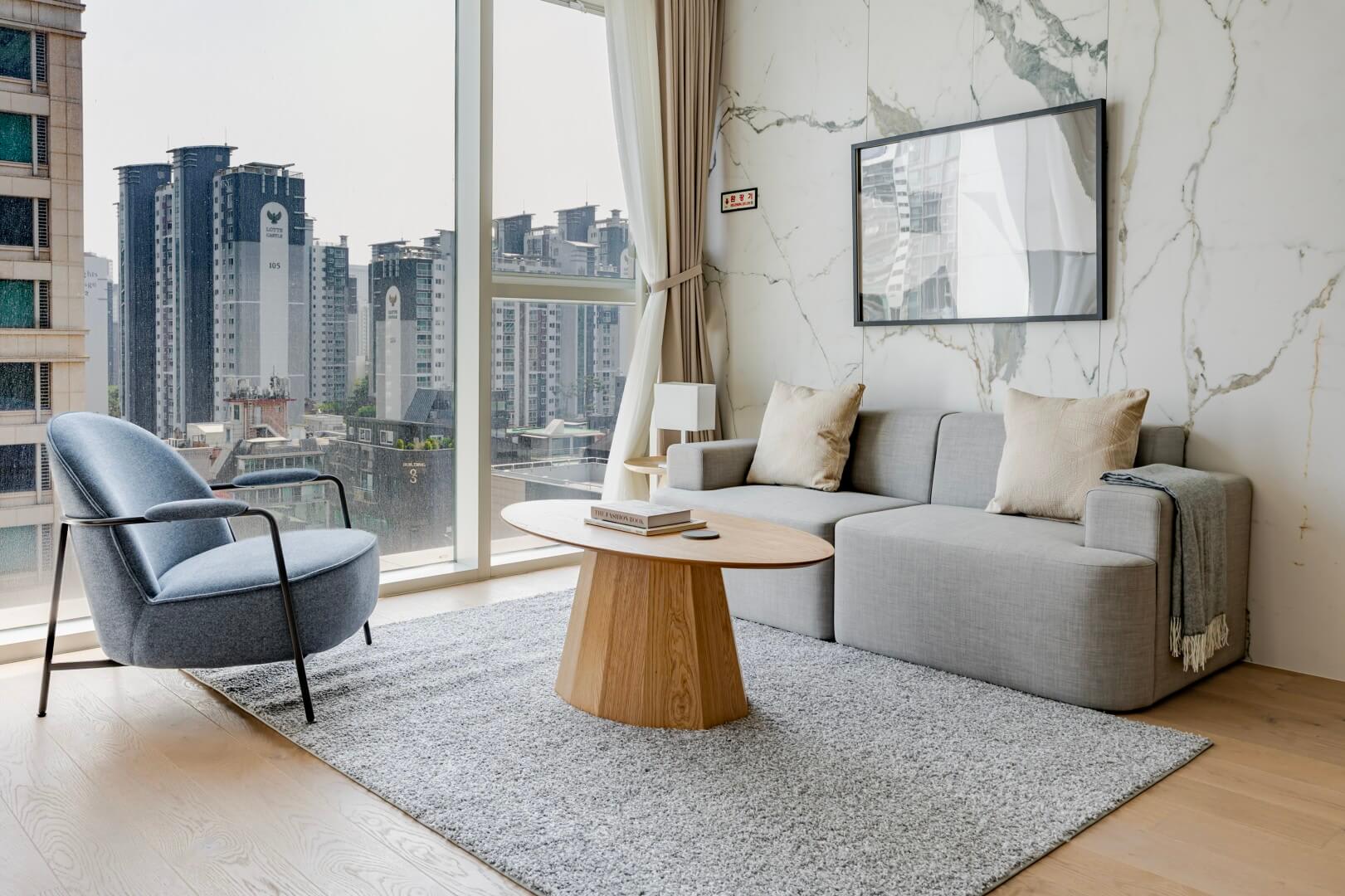
Ultimately, deciding whether to stay in a furnished apartment or hotel for an extended period while traveling for work is a personal choice. In either case, you’ll have a solid place to crash while on your work assignment—but you will need to choose.
Choose a hotel if…
- You want a more social atmosphere
- You don’t mind eating out for most meals
- You want regular cleaning and linen changes
- You want to be centrally located
- You don’t mind living in a smaller space
Choose a furnished apartment if…
- You want a quieter, neighborhood feel
- You want to “live like a local”
- You want space to relax
- You want to maintain your usual routines
- You want to cook often
- You want to watch your spending
If a furnished apartment sounds like the right move, check out the thousands of available apartments on Blueground, which has properties in cities all over the world.

Related Stories


